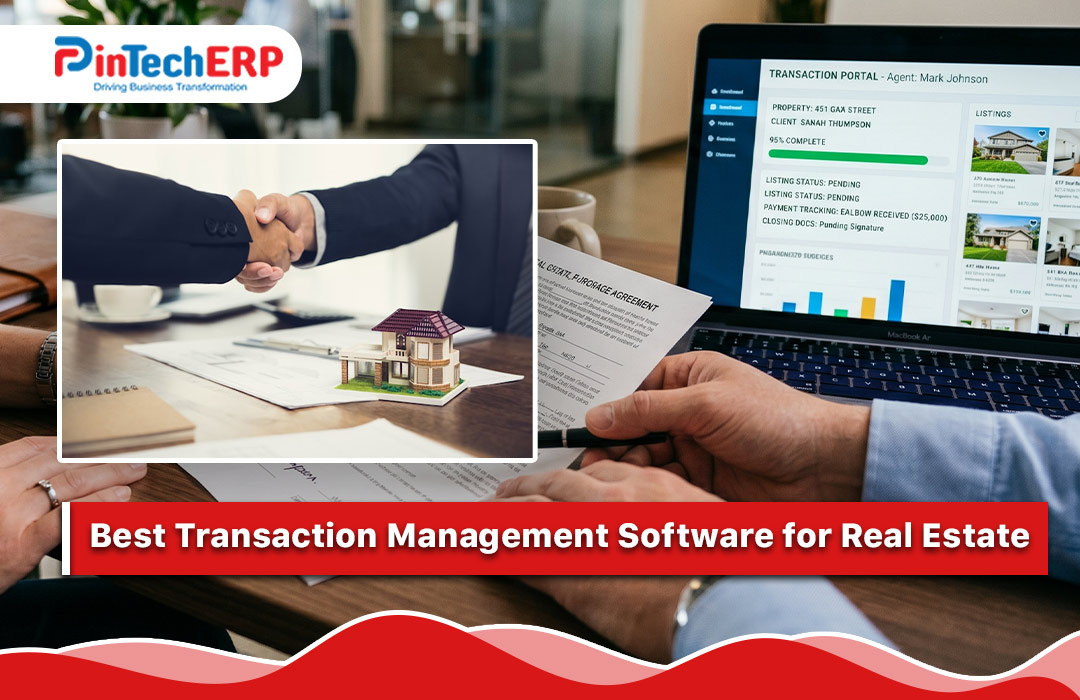
The real estate industry has undergone a significant digital transformation over the past decade. With increasing competition, complex transactions, regulatory requirements, and growing client expectations, real estate companies can no longer rely on spreadsheets, emails, and manual paperwork to manage deals efficiently.
This is where Transaction Management Software for Real Estate becomes essential. Modern transaction management platforms help brokers, agents, developers, property managers, and real estate firms streamline every stage of a property transaction—from lead generation and contract management to approvals, payments, documentation, and reporting.
In 2026, businesses are looking for solutions that not only manage transactions but also integrate accounting, CRM, inventory, project management, and customer communication into a single platform.
In this guide, we’ll explore the benefits of transaction management software and review the best solutions available for real estate businesses.
What Is Real Estate Transaction Management Software?
Real Estate Transaction Management Software is a digital platform designed to automate and organize the entire property transaction lifecycle.
Instead of managing deals through multiple disconnected tools, agents and developers can track every transaction from one centralized dashboard.
Typical functions include:
- Deal tracking
- Contract management
- Document storage
- Digital approvals
- Client communication
- Payment tracking
- Commission management
- Compliance monitoring
- Reporting and analytics
The goal is to reduce administrative work, improve accuracy, accelerate deal closures, and enhance customer experience.
Why Real Estate Companies Need Transaction Management Software
Managing real estate transactions manually often leads to:
- Lost documents
- Missed deadlines
- Communication gaps
- Payment discrepancies
- Compliance risks
- Delayed closings
A dedicated transaction management system solves these challenges by providing automation and visibility across the entire workflow.
Key Benefits
Faster Deal Closures
Automated workflows eliminate bottlenecks and reduce manual follow-ups.
Improved Document Management
Store contracts, agreements, ownership documents, and client records securely in one place.
Better Collaboration
Agents, managers, legal teams, and clients can access required information instantly.
Enhanced Compliance
Maintain proper records and audit trails to comply with industry regulations.
Real-Time Reporting
Monitor sales pipelines, transaction status, revenues, and team performance through dashboards.
Reduced Operational Costs
Automation reduces administrative workload and minimizes costly errors.
Features to Look for in Real Estate Transaction Management Software
Before selecting a solution, consider the following capabilities:
Transaction Tracking
Monitor every deal from inquiry to final closing.
Document Management
Secure storage and sharing of contracts, agreements, and legal documents.
Workflow Automation
Automate approvals, reminders, notifications, and task assignments.
CRM Integration
Manage leads, prospects, and customer interactions within the same platform.
Accounting Integration
Track invoices, payments, commissions, and financial reporting.
Inventory Management
Monitor available units, sold properties, and booking status.
Mobile Accessibility
Enable teams to manage transactions from anywhere.
Role-Based Access
Control data access based on employee responsibilities.
Reporting and Analytics
Generate insights into sales performance and operational efficiency.
Top 5 Best Transaction Management Software for Real Estate in 2026
1. PinTech ERP – Best Overall Real Estate Transaction Management Software
When it comes to comprehensive transaction management for real estate developers, brokers, and property businesses, PinTech ERP stands out as one of the most complete solutions available in 2026.
Unlike traditional transaction management tools that focus only on deal tracking, PinTech ERP provides a fully integrated ecosystem that connects every business process.
Key Features
- Real estate transaction management
- Property inventory management
- CRM and lead tracking
- Sales automation
- Accounts and finance management
- Customer payment tracking
- Project management
- Land sharing management
- Digital document management
- Management Information System (MIS)
Why PinTech ERP Leads the Market
PinTech ERP is specifically designed for real estate and construction companies. The platform helps organizations manage transactions while maintaining complete visibility over financials, inventory, customer relationships, and project execution.
Best For
- Real estate developers
- Construction companies
- Property management firms
- Land sharing businesses
- Large real estate enterprises
Major Advantages
- Industry-specific features
- Cloud-based architecture
- Scalable solution
- End-to-end business management
- Advanced reporting and analytics
For organizations seeking a complete transaction management solution rather than a standalone tool, PinTech ERP offers exceptional value.
2. Dotloop
Dotloop is a widely recognized transaction management platform designed for brokers and agents.
Key Features
- Digital signatures
- Document sharing
- Workflow automation
- Compliance management
- Transaction tracking
Pros
- Easy collaboration
- User-friendly interface
- Strong document management
Cons
- Limited ERP capabilities
- Additional integrations required for accounting
Best For
Independent agents and brokerage firms.
3. SkySlope
SkySlope is known for compliance-focused transaction management.
Key Features
- Transaction auditing
- Compliance monitoring
- Digital document storage
- Workflow automation
- Agent performance tracking
Pros
- Excellent compliance controls
- Secure document handling
- Strong brokerage support
Cons
- Less comprehensive for developers
- Limited project management functionality
Best For
Brokerages prioritizing regulatory compliance.
4. BrokerMint
BrokerMint combines transaction management with back-office operations.
Key Features
- Commission tracking
- Transaction management
- Accounting integrations
- Reporting tools
- Workflow automation
Pros
- Strong financial tracking
- Commission management
- Broker-focused features
Cons
- Limited customization
- Primarily focused on brokerages
Best For
Mid-sized real estate brokerage firms.
5. Paperless Pipeline
Paperless Pipeline offers a streamlined solution for transaction coordination.
Key Features
- Transaction tracking
- Document storage
- Task management
- Compliance support
- Reporting dashboards
Pros
- Affordable pricing
- Easy implementation
- Simple user experience
Cons
- Fewer enterprise-level features
- Limited advanced automation
Best For
Small agencies and growing teams.
How Transaction Management Software Improves Real Estate Operations
Centralized Data Management
All property, customer, transaction, and financial information remains accessible from a single platform.
Reduced Administrative Burden
Automated workflows significantly reduce paperwork and manual data entry.
Improved Customer Experience
Clients receive faster responses, transparent updates, and smoother transactions.
Enhanced Team Productivity
Employees spend less time on repetitive tasks and more time closing deals.
Better Financial Control
Integrated accounting ensures accurate payment tracking and revenue management.
Cloud-Based vs Traditional Transaction Management Systems
Cloud-Based Solutions
Benefits
- Remote accessibility
- Automatic updates
- Lower infrastructure costs
- Faster deployment
- Better scalability
Traditional On-Premise Systems
Benefits
- Internal hosting control
- Customized infrastructure
Challenges
- Higher maintenance costs
- Limited accessibility
- Complex upgrades
For most real estate businesses in 2026, cloud-based platforms offer greater flexibility and efficiency.
Common Challenges Solved by Transaction Management Software
Missing Documents
Digital repositories eliminate document loss.
Delayed Approvals
Automated workflows speed up approval cycles.
Communication Gaps
Centralized communication keeps all stakeholders informed.
Financial Tracking Issues
Integrated accounting provides complete visibility into payments and revenues.
Compliance Risks
Audit trails and document history improve regulatory compliance.
How to Choose the Right Transaction Management Software
When evaluating software, consider:
Business Size
Choose a solution that can scale with future growth.
Industry Specialization
Real estate-focused platforms typically deliver better results.
Integration Requirements
Ensure compatibility with CRM, accounting, and marketing tools.
Security Standards
Verify data encryption and access controls.
Reporting Capabilities
Look for customizable dashboards and analytics.
Customer Support
Reliable support is critical during implementation and ongoing operations.
Future Trends in Real Estate Transaction Management
The future of transaction management software will be driven by:
Artificial Intelligence
AI-powered deal recommendations and predictive analytics.
Workflow Automation
More sophisticated automation for approvals and compliance.
Mobile-First Platforms
Complete transaction management from smartphones and tablets.
Digital Documentation
Expanded use of e-signatures and paperless transactions.
Business Intelligence
Advanced dashboards offering real-time insights into sales and profitability.
Conclusion
As the real estate market becomes increasingly competitive, transaction management software has evolved from a convenience to a necessity. Businesses that continue relying on manual processes risk inefficiencies, errors, and slower growth.
Among the available solutions, PinTech ERP stands out as the most comprehensive platform for real estate developers, construction companies, and property businesses. By combining transaction management, CRM, accounting, inventory management, project tracking, and reporting within a single cloud-based ecosystem, it enables organizations to streamline operations and maximize profitability.
Whether you are a broker, developer, or enterprise real estate company, investing in the right transaction management software can significantly improve efficiency, customer satisfaction, and long-term business success.
In 2026, the organizations that embrace digital transformation will be the ones that lead the real estate industry—and choosing the right transaction management platform is an important step in that journey.