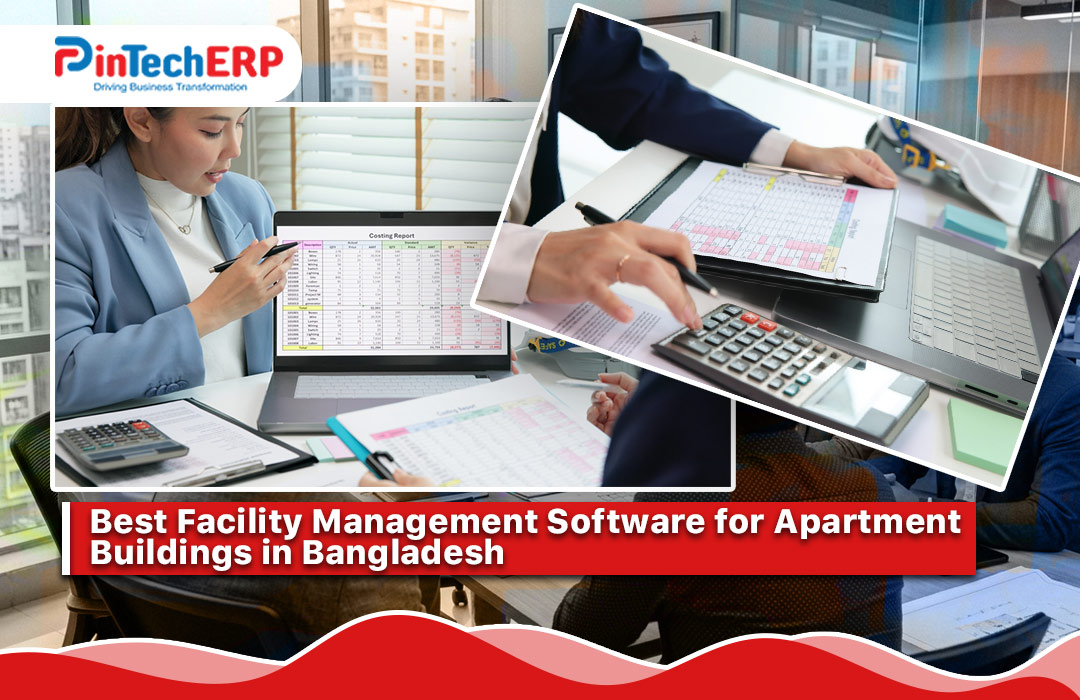
Walk into almost any mid-to-large apartment complex in Dhaka, Chattogram, or Sylhet today, and you’ll likely find a building management committee still relying on handwritten registers, printed notices on the lift wall, and a caretaker’s personal notebook to track service charges, maintenance requests, and visitor logs. As apartment living becomes the norm in Bangladesh’s urban centers, this manual approach is increasingly unable to keep up with residents’ expectations — and it’s costing building management committees and facility operators real time and money. Facility management software is designed to fix exactly this problem.
Why Apartment Buildings in Bangladesh Need Dedicated Facility Management Software
Apartment buildings are not simple properties to run. A typical mid-sized building in Dhaka might have anywhere from 20 to over 200 units, each generating monthly service charge obligations, occasional maintenance requests, utility usage that needs to be tracked and billed, and a constant flow of visitors, deliveries, and staff who need to be logged for security purposes.
Without software, these problems tend to show up repeatedly:
- Service charge collection becomes a monthly headache, with committees chasing residents for payment and manually updating registers.
- Maintenance requests get lost or delayed, because there’s no ticketing system — just a phone call to the caretaker who may or may not remember to follow up.
- No transparency for residents, who often don’t know exactly what their service charge covers or how the building’s shared fund is being spent.
- Security gaps, since visitor and vendor entries are often logged (if at all) on paper that’s rarely reviewed.
- Vendor and contract management chaos, with no central record of AMC (Annual Maintenance Contract) renewal dates for lifts, generators, or fire safety systems.
- Disputes between residents and management committees, frequently arising from a lack of clear, accessible financial records.
Core Features of Good Facility Management Software
Service Charge and Billing Automation
The software should automatically generate monthly service charge invoices for each unit based on predefined formulas (per square foot, per unit, or a hybrid model), track who has paid, and send automatic reminders to residents with outstanding dues.
Maintenance Ticketing
Residents should be able to log a maintenance issue — a leaking pipe, a broken intercom, a lift malfunction — through an app or portal, and have it automatically routed to the right maintenance staff, with status updates visible to both the resident and the building committee.
Visitor and Security Management
A digital visitor log, ideally integrated with gate security, that records who entered the building, when, and for what purpose, gives both security staff and residents peace of mind, and creates a searchable record if an incident needs to be investigated later.
Utility and Common Area Expense Tracking
Shared expenses like generator fuel, common area electricity, water pump maintenance, and cleaning staff salaries need to be tracked and, where applicable, apportioned fairly across units.
Vendor and AMC Management
Lift maintenance, generator servicing, fire extinguisher refilling, and pest control contracts all come with renewal dates and payment schedules. Good facility software keeps track of these automatically and alerts the committee before a contract lapses.
Financial Transparency for Residents
Perhaps the single biggest source of friction between residents and management committees in Bangladeshi apartment buildings is a lack of financial transparency. Software that gives residents a login to view the building’s income and expense summary — without needing to attend a meeting or request a printed statement — dramatically reduces disputes.
Communication and Notices
Instead of printed notices taped to the lift door, a digital notice board or app notification ensures every resident actually receives important updates about water outages, maintenance schedules, or community events.
The Bangladesh-Specific Considerations
Facility management software built for Western markets often assumes a level of formal building management infrastructure that doesn’t map cleanly onto Bangladesh’s context, where many buildings are managed by a rotating volunteer committee of residents rather than a professional property management company. Software chosen for this market needs to be:
- Simple enough for a non-technical volunteer committee to operate without extensive training.
- Flexible on billing models, since service charge calculation methods vary significantly from building to building.
- Mobile-first, since most residents and committee members will interact with it primarily through a phone, not a desktop computer.
- Able to handle Bangla-language communication for notices and resident-facing content.
- Affordable at scale, since committees are working with residents’ collected funds, not a corporate budget.
Connecting Facility Management to the Bigger Real Estate Picture
For developers who build and then hand over apartment complexes, facility management doesn’t exist in isolation — it’s the next chapter after sales and construction. A developer that also offers or recommends a facility management system for the buildings they’ve delivered creates a much smoother experience for buyers, and keeps a relationship with residents long after handover. This is one of the reasons real estate-focused ERP platforms increasingly bundle facility management alongside sales, CRM, and construction modules rather than treating it as a completely separate product. You can see how this connected approach works in this overview of ERP software for real estate companies, which covers how a developer’s systems can extend from pre-sales all the way through to post-handover building operations.
How PinTech ERP Supports Apartment Facility Management
PinTech ERP’s facility management capabilities are built around the day-to-day realities of running an apartment building in Bangladesh:
- Automated service charge billing, configurable per building’s own formula, with automatic monthly invoice generation and payment reminders sent directly to residents.
- Maintenance ticketing system, so residents can raise an issue through a simple portal, and the building’s maintenance staff receive it instantly with a clear status trail.
- Digital visitor and vendor log, giving security staff and committees a searchable record of building access.
- Vendor contract tracking, with automatic alerts before AMC renewals for lifts, generators, and fire safety equipment come due.
- Resident-facing transparency dashboard, where every unit owner can log in and see exactly how the building’s collected funds are being spent.
- Notice and announcement tools, replacing printed notices with something every resident actually sees.
Because it’s part of the same PinTech ERP ecosystem that supports developers through sales and construction, buildings that were built and sold using PinTech ERP can transition smoothly into facility management without starting from scratch on a completely different system.
What to Look For When Choosing a System
Before selecting facility management software for your building or portfolio of buildings, consider:
- Can non-technical committee members operate it comfortably, or does it require ongoing IT support?
- Does it support the specific service charge and billing formula your building already uses?
- Is there a resident-facing app or portal, or does everything have to go through the committee?
- How does it handle security and visitor logs, and does it integrate with existing gate hardware if you have any?
- What’s the cost structure, and does it scale reasonably as more buildings or units are added?
Frequently Asked Questions
Who typically pays for facility management software — the developer or the building committee? It varies. Some developers include a facility management subscription as part of the handover package for a set initial period, while in other cases the resident committee takes on the cost once formed, funding it from the shared service charge collection.
Can facility management software work for smaller buildings, not just large complexes? Yes. Even a 15-to-20 unit building benefits from automated billing reminders and a maintenance ticketing system, since the core problems — late payments and lost maintenance requests — happen regardless of building size.
What happens if the management committee changes, as it often does each year in Bangladeshi buildings? Good software stores all financial and maintenance history centrally, so a new committee can log in and see the complete record instantly, instead of relying on handover notes or a previous committee member’s personal files.
Does this software require residents to install anything complicated? Most modern systems offer a simple mobile app or web portal that residents can use with just a phone number or email login, requiring no technical setup beyond what’s needed for any typical mobile app.
Final Thoughts
As apartment living continues to expand across Bangladesh’s cities, the buildings that run smoothly will be the ones where service charges are collected on time, maintenance requests are resolved quickly, and residents can see exactly where their money goes. Facility management software isn’t a luxury for large commercial complexes anymore — it’s becoming essential for any apartment building that wants to avoid the recurring friction of manual, paper-based management. Choosing a system built with Bangladesh’s specific building management culture in mind, and one that can connect naturally to the broader real estate lifecycle, sets both committees and residents up for a far less stressful experience.